Screen Time for Students: What Every Parent Should Know Before It Impacts Focus
One question that keeps running in almost every parent’s mind is: Is my child learning or just spending time on a screen?”
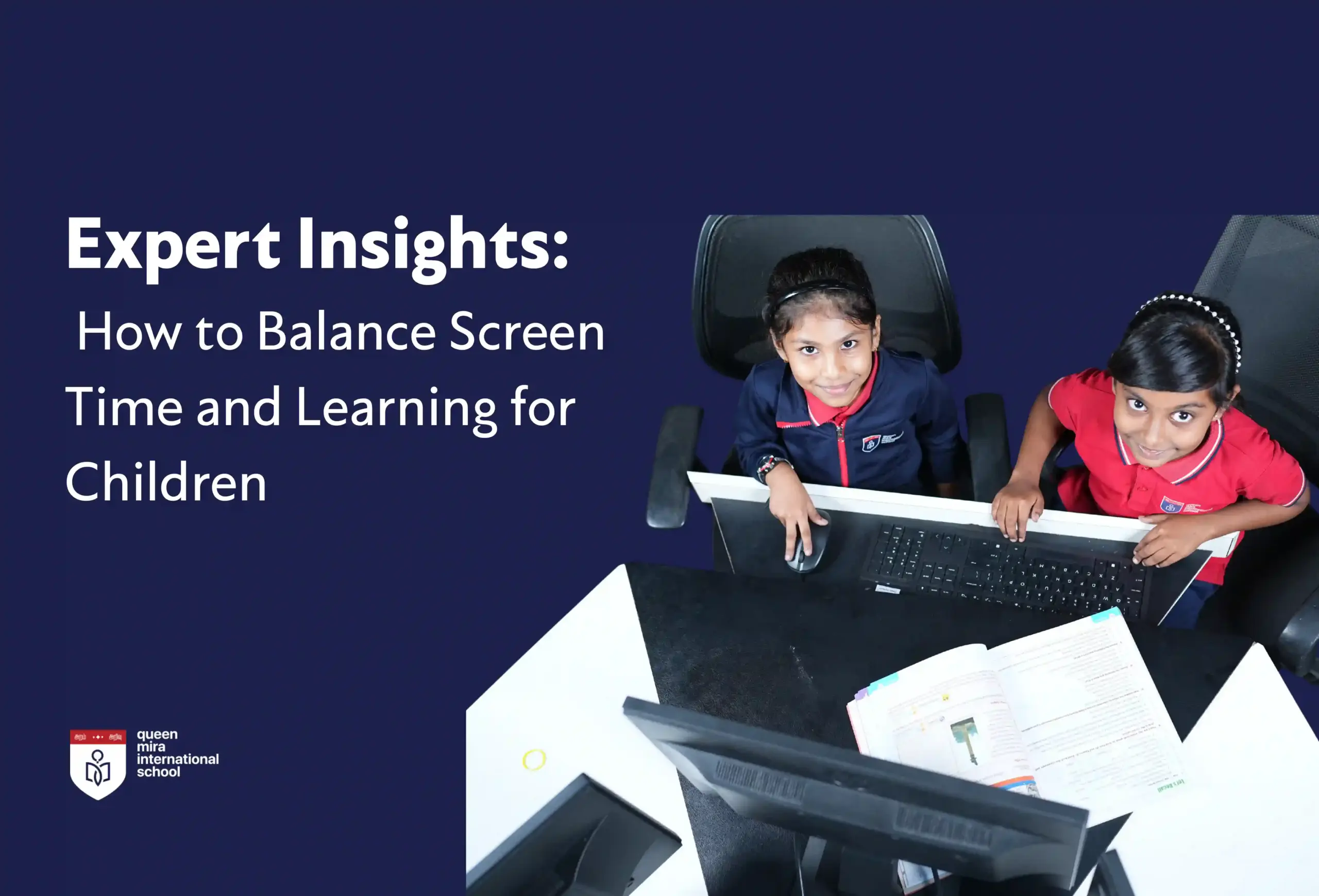
Because screens are no longer optional. From online classes to group assignments, digital learning for children has become part of their everyday education. But at the same time, concerns around screen time for students are growing and rightly so.
Well, the goal today is not to eliminate screens, but to make screen time meaningful. Let us break this down in a way that actually helps you make better decisions at home.
Screen Time for Students Today: It is Not All the Same
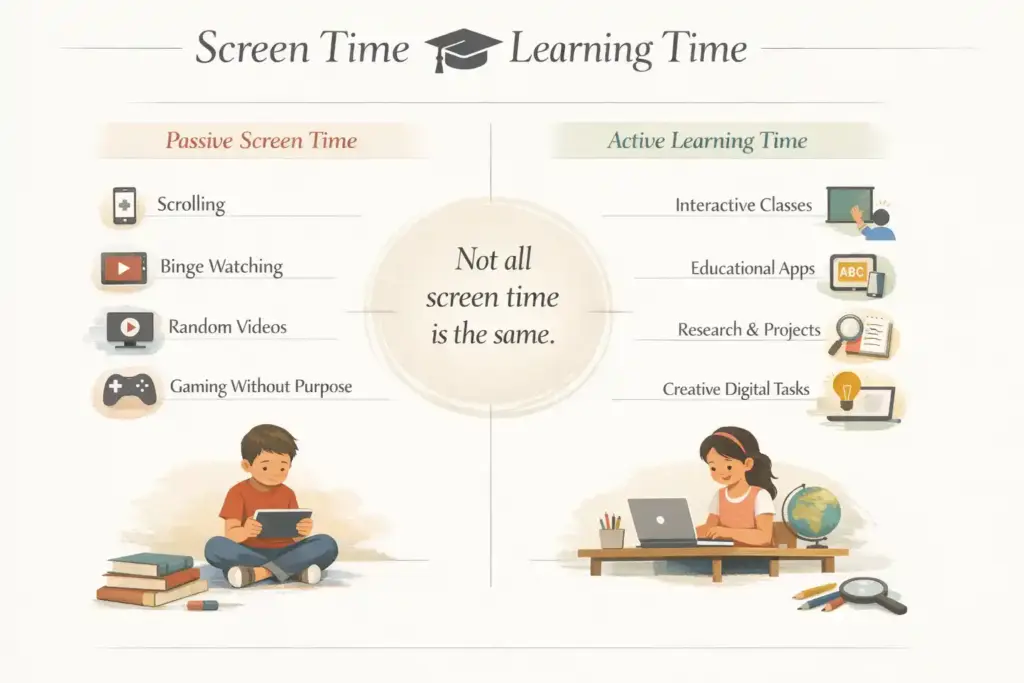
Not all screen time impacts, and this is where most confusion begins.
There is a big difference between:
- Watching random videos
- Attending an interactive online class
- Using a learning app/module
- Gaming for hours
This is where the idea of screen time vs learning becomes important.
A simple way of looking at it:
- Passive screen time → entertainment, scrolling, & binge watching
- Active screen time → thinking, responding, solving, & creating
Here is a quick reflection for you. When your child is on a screen, are they consuming or engaging?
How do Healthy Screen Time Habits Look?
When used right, screens can actually support deeper learning.
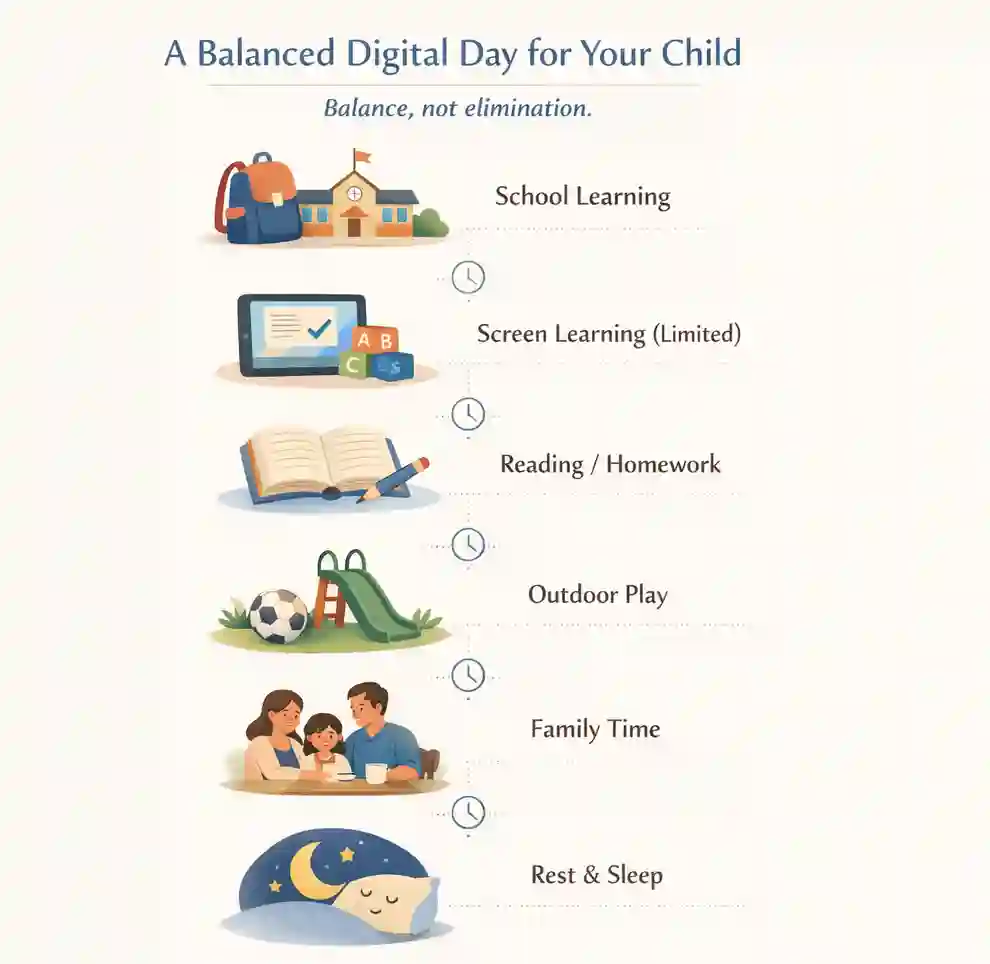
Here is what good digital learning for children can offer:
- Visual understanding of complex topics
- Access to global knowledge and perspectives
- Interactive problem-solving
- Learning at a comfortable pace
But here is the catch: The value does not come from the screen, but from how it is used.
Where Screen Time Starts Becoming a Problem
The concern isn’t technology; it is unstructured usage.
Excessive or unguided screen time for students can lead to:
- Shorter attention spans
- Sleep disturbances
- Difficulty focusing on offline tasks
- Reduced physical activity
- Increased dependency on devices
Pause and think: Does your child get restless without a screen? If yes, then it is not just screen time, but it is becoming a habit loop.
RELATED: Planning School Admissions 2026? Choose a System That Teaches Children How to Think
How to Help Your Child Develop Healthy Screen Time Habits
There is no perfect number that works for every child.
However eperts broadly suggest:
- Younger children → limited & guided screen use
- School-going children → structured & purpose-driven use
- Teens → balanced with offline chores/responsibilities
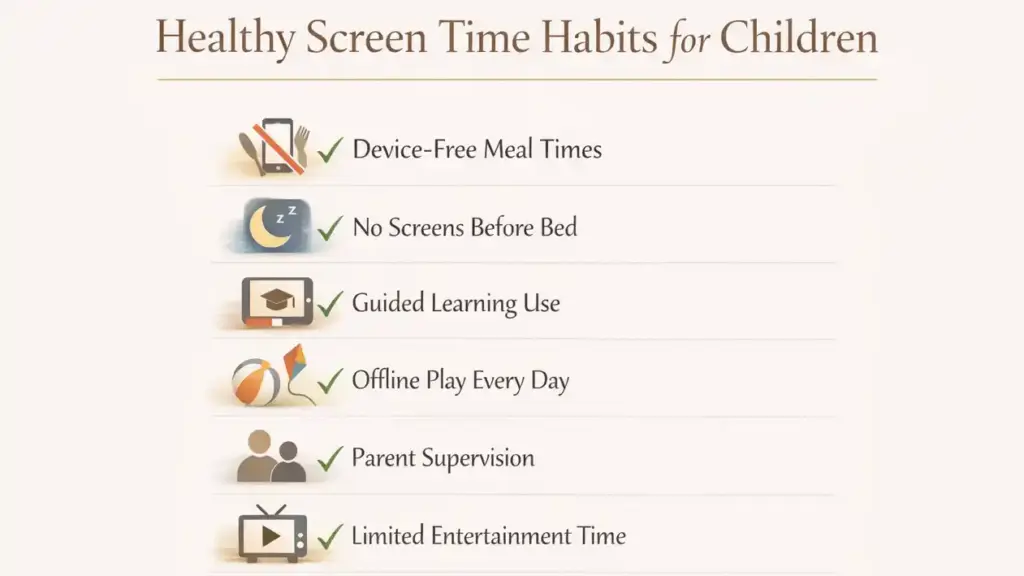
So instead of asking: “How many hours is okay?”, ask “What is my child doing during those hours?”
That will bring about the shift toward healthy screen time habits!
Practical Screen Time Tips for Parents (That Actually Work)
Let us move from theory to reality. Here are screen time tips for parents that are simple & effective:
1. Create “Device-Free Zones”
Dining table. Bedrooms. Study time.
These small boundaries make a big difference.
2. Set Predictable Routines
Children respond better to structure than restriction.
Example:
- Learning screen time → allowed
- Random screen time → limited
3. Co-Use, Don’t Just Control
Instead of saying “Stop using the phone”, try “Can you show what you are learning?”
4. Balance with Offline Activities
Sports, reading, conversations, & home chores, these are not “extra” but essential
5. Model the Behaviour
Children do not follow instructions. They follow patterns.
Reality check: If screens are always around them, they will obviously choose screens.
Turning Screen Time into Learning Time
Instead of reducing screen time completely, shift it. This is where screen time vs learning becomes a conscious choice.
Here is how you can do it:
- Encourage creative use (projects, research, presentations)
- Choose curated educational platforms
- Use digital classrooms as structured learning spaces
- Set goals for what is learned, not just time spent
How do Schools Shape Screen Time for Students?
Parents often carry the full burden of managing screens. However, schools also play a huge role in defining how children see technology.
An experienced school will:
- Use technology as a tool, not a replacement
- Encourage interaction, not isolation
- Blend digital learning with real-world experiences
A Balanced Model of How QMIS Approaches Digital Learning
At QMIS, the focus is not just on using technology, but using it thoughtfully.
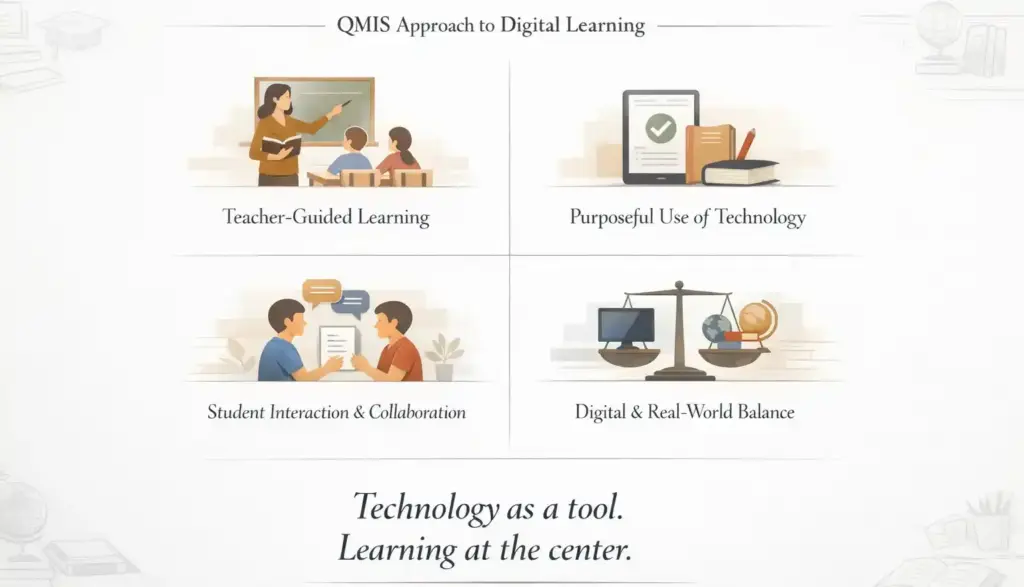
Here is how the approach stands out:
- Digital tools are integrated into learning and not overused
- Classrooms remain interactive and discussion-led
- Students are guided & monitored on when and how to use screens
- Equal emphasis is placed on communication, activity, and collaboration
At QMIS, the goal is simple: build digitally aware learners, and not screen-dependent children
A Quick Parent Check
Before you move on, take a moment:
- Is my child’s screen time structured or random?
- Is there a balance between online and offline time?
- Do they learn something meaningful from it?
- Does my child engage more with screens than people?
If even one answer concerns you, it is time to rethink the balance.
What is Changing in 2026 and Why It Matters!
Modern education is shifting toward:
- Reduced passive consumption
- Guided digital learning
- Skill-based engagement
- Hybrid classrooms (online + offline)
- Active creation over passive watching
- Better digital discipline and self-regulation
- Media literacy & safe online behaviour
- Teacher-guided technology use
- More interaction, collaboration, & real-world application
- Quality, and not more screen time
Because the future is not screen-free but screen-smart.
FAQs
How much screen time is healthy for children?
It depends on age and purpose. Structured, learning-focused screen time is more valuable than passive consumption.
Is digital learning necessary and good for children?
Yes, when guided properly. It enhances understanding and exposure.
How can parents reduce/manage excessive screen time?
By setting routines, encouraging offline activities, and guiding usage instead of completely restricting it.
What is the difference between learning screen time and entertainment?
Learning involves engagement and thinking; entertainment is mostly passive consumption.
How do schools manage digital learning responsibly?
Schools are able to manage by integrating technology in a structured, balanced, & supervised way.
Concluding Thoughts
Screens are not the problem; unintentional use is!
The real question is not: “Should my child use screens?” but “What is my child becoming because of them?”
So, if you are looking for a school that balances technology and meaningful learning? Explore admissions at QMIS and discover a thoughtful approach to modern education.