The Summer Paradox!
Every April in Tamil Nadu, the shift in the air post exams is evident. School bags are zipped away, alarm clocks are ignored, and children suddenly find themselves with an abundance of time.
And yet, for most parents, this “freedom” comes with a question: What should my child actually do all day?
Too much structure feels exhausting, too little feels unproductive, screens creep in, routines disappear, and before you know it, half the holidays are gone.
But here is a thought worth holding on to: Summer isn’t a break from learning, but a welcome change in how learning happens.
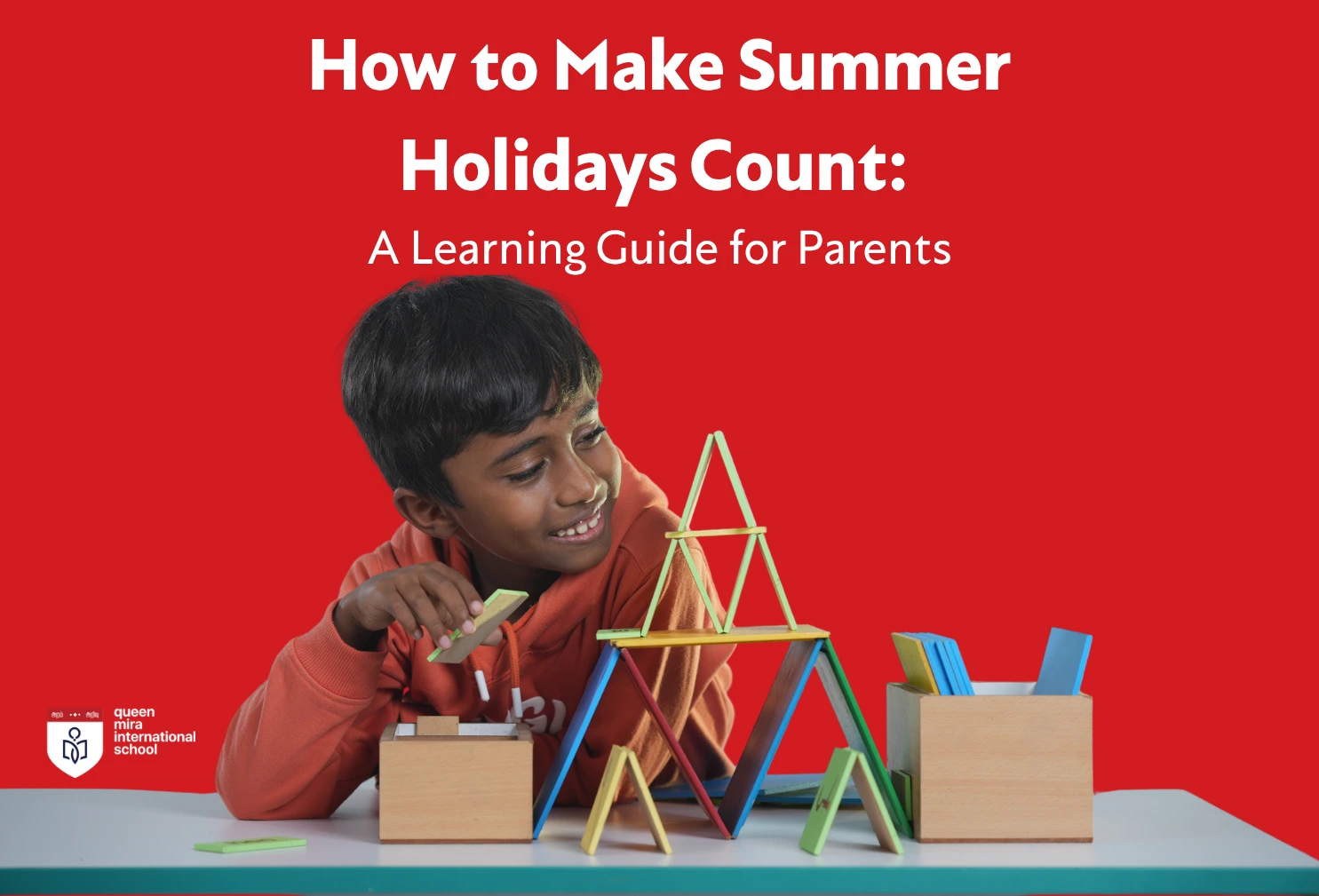
The goal is not to recreate school at home. It is to make productive summer holidays for kids feel natural, joyful, and meaningful.
Why Unstructured Time Matters More Than You Think?
There is growing research (including insights from Harvard’s Centre on the Developing Child) that shows children need downtime to process, reflect, and build creativity.
After a full academic year, their brains aren’t asking for more worksheets, but for space!
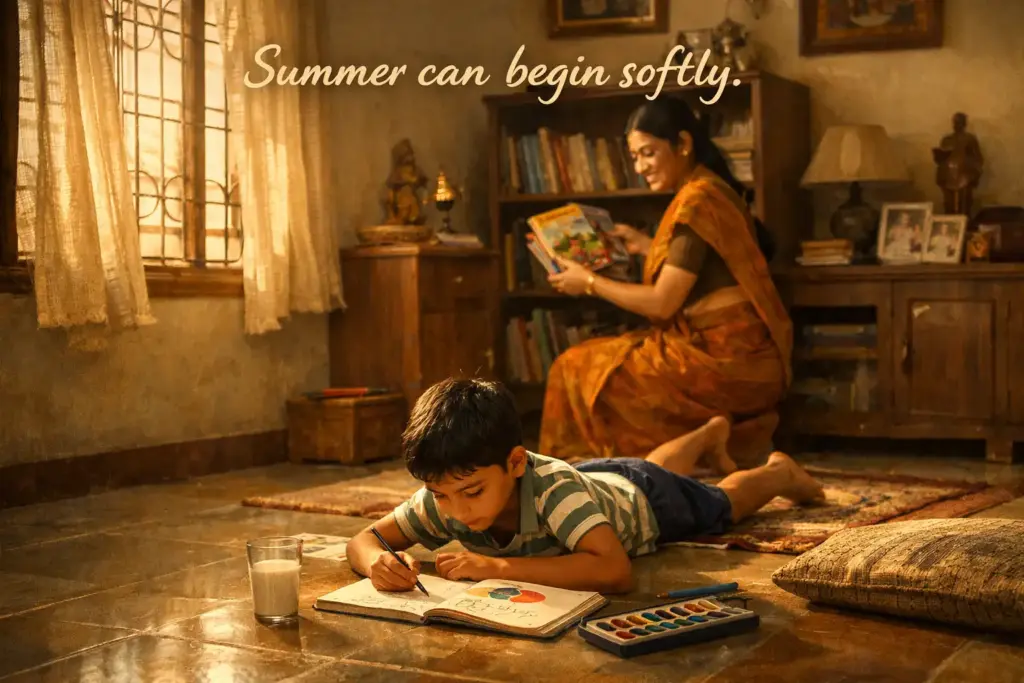
Unstructured time helps children:
- Recover from cognitive fatigue
- Build imagination and independent thinking
- Develop emotional resilience
Here is a quick reflection for parents: When was the last time your child was bored and then created something on their own?
That moment, that shift from boredom to curiosity, is where real growth begins.
Can Summer Learning Activities for Children Feel Like Play (Not Homework)?
Let us next talk about the most effective and productive form of engaging with a child: reading, the one habit that quietly shapes everything else.
But many parents go wrong here when they turn reading into another task.
Instead, try this:
- Let your child choose what they want to read (comics count!)
- Create a “reading corner” at home
- Read together, even if it is for 15 minutes a day
According to a 2023 National Literacy Trust report, children who enjoy reading are three times more likely to have better academic outcomes.
Try this: Ask your child, “What did you like about this story?” instead of “Did you finish it?”
This kind of collaborative effort makes the activity engaging and also enjoyable for the child.
RELATED: Planning School Admissions 2026? Choose a System That Teaches Children How to Think
Real-World Learning: The Best Holiday Activities for School Kids in India
Some of the most powerful & essential learning does not happen at a desk.
It happens in kitchens, markets, and conversations with neighbours and friends
Think about this:
- Grocery shopping introduces budgeting & mental math
- Cooking teaches measurement, sequencing, & patience
- Gardening builds responsibility & observation
- Listening to grandparents’ stories builds language and cultural understanding
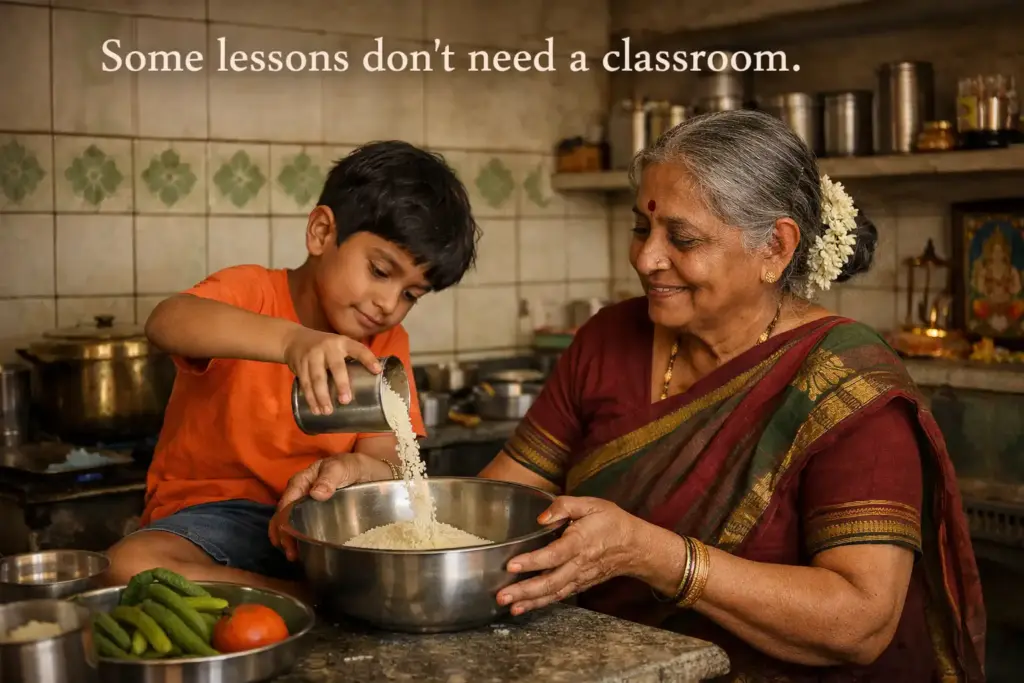
These are summer learning activities for children that don’t feel like learning, but stay with them for life.
Here is an interactive idea: Give your child ₹200 & ask them to plan a small meal. Watch what happens.
How to Keep Kids Engaged in Summer Without Saying “Go Study”
Parents and elders have to understand that real-time engagement doesn’t come from pressure, but from involvement.
Children stay engaged even longer than you desired when they feel:
- Curious
- Capable
- Connected
So, instead of saying: “Go do something useful,” try: “What would you like to build today?”
This could be:
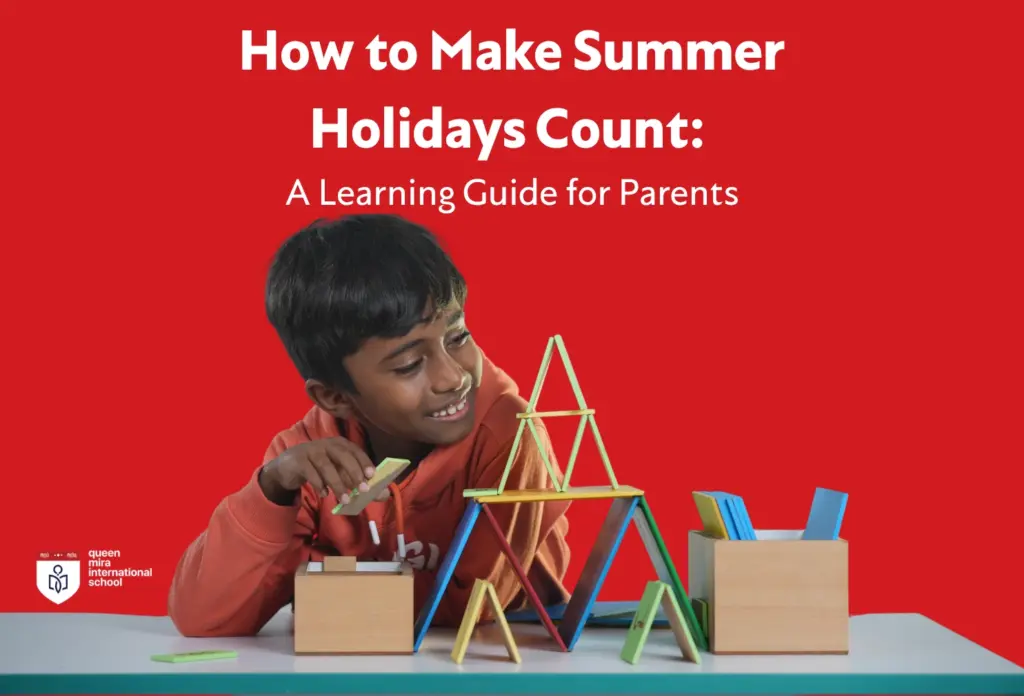
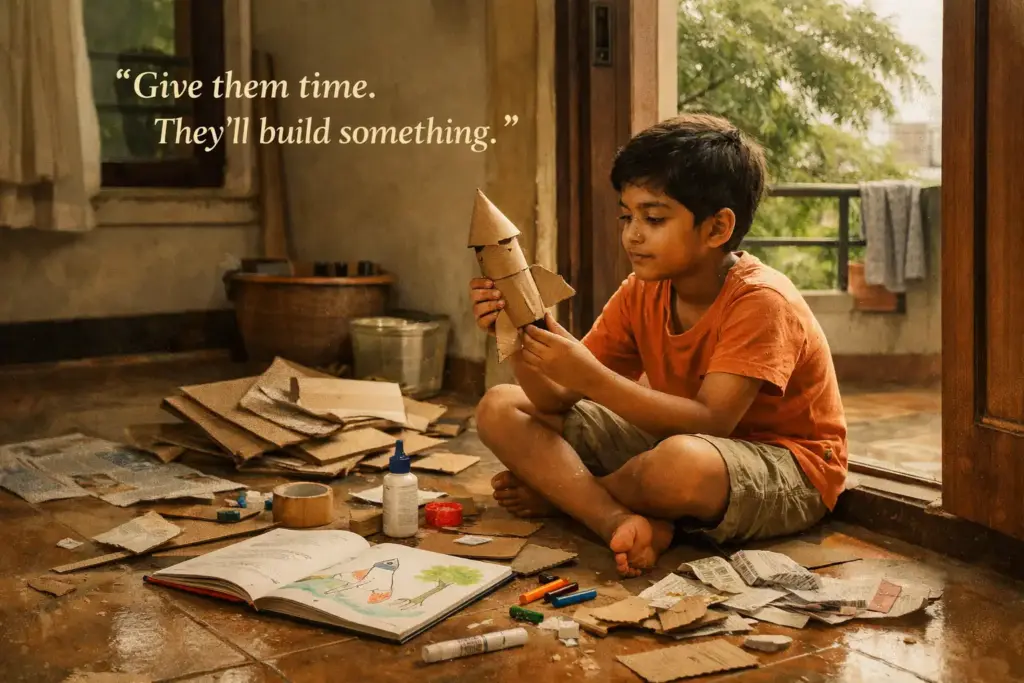
- A simple craft work
- A short story
- A numbered painting
- Even a simple puzzle challenge
The goal is not perfection. It is participation.
Why Play & Movement Is Non-Negotiable During Summer?
Here is something many parents underestimate: Physical movement is directly linked to brain development.
Studies show that children who engage in regular physical activity develop better focus, improved memory, and higher emotional regulation.
So, considering the heat during the summer, find the right spots and games to make play intentional:
- Evening playtime
- Cycling
- Swimming
- Even simple indoor movement games
Small shift, big impact: Instead of asking, “Did you study today?” ask, “Did you run around and play today?”
Creative Time Isn’t Extra, It is Essential
Drawing, music, building, craft, these are not “time pass” activities or reserved for only the art-focused kids, these build:
- Focus
- Problem-solving
- Confidence
In fact, many educators now agree that creative activities improve long-term focus & academic performance because they strengthen not just how long children can retain but also how they think!
Give your child a simple challenge: “Create something using only waste materials at home.”
You will surely be surprised by the results.
Screen Time: The Real Question Isn’t “How Much?”
Let us be honest. Totally avoiding screens is unrealistic. So the real question is one must contemplate is: Is screen time passive or purposeful?
Instead of banning screens:
- Set clear time boundaries
- Choose content together
- Balance it with offline activities
For example: Watching a documentary → followed by a discussion or playing a game → followed by a real-world version of it
Screens need not replace experiences. They should support them.
Summer Break Tips for Parents: Finding the Right Balance
If there is one takeaway from all of this, it is this: Balance matters more than intensity.
Children do not need 6 hours of structured learning. They need or rather bloom well in:
- A little routine
- A lot of freedom
- Meaningful engagement
A simple daily rhythm during the summer holidays could look like:
- Morning: reading or creative work
- Afternoon: rest / free play
- Evening: outdoor activity
That’s it! No pressure. No overload.
The QMIS Perspective: Learning That Doesn’t Stop With School
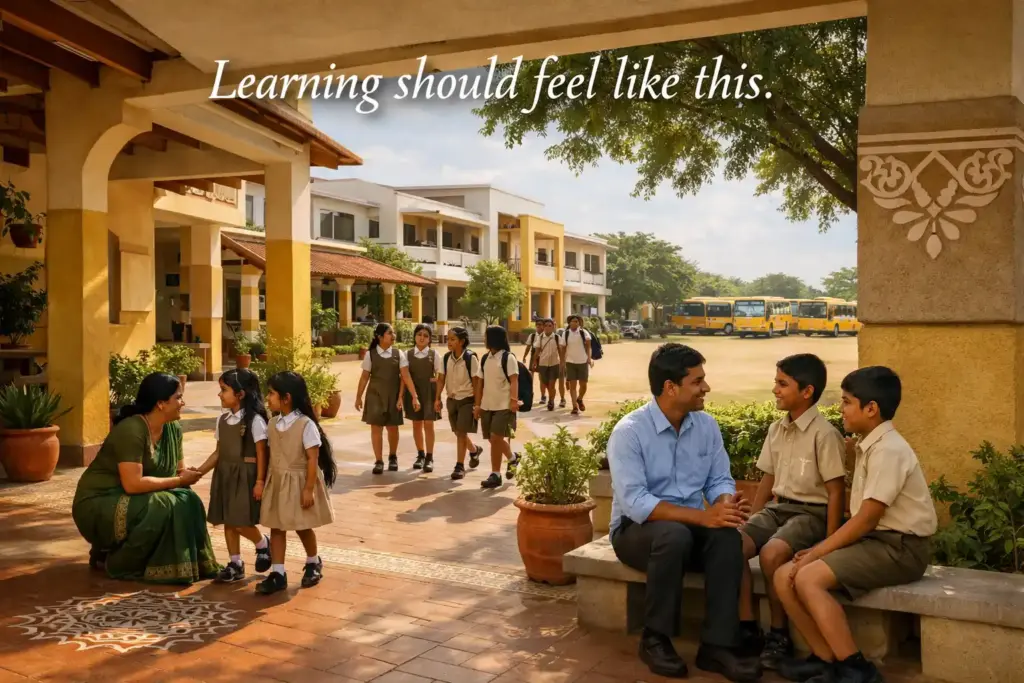
At Queen Mira International School, learning is not limited to classrooms, books, or curricula.
The same principles that guide our classrooms, curiosity, movement, and real-world connection, extend into how we think about holidays.
Because the goal is not just academic success, but raising children who are:
- Curious
- Confident
- Capable of thinking independently
Summer is not a pause in that journey, but an opportunity to deepen it.
FAQs
How can parents make summer holidays productive for children?
Focus on balance, combine reading, play, creativity, & real-world experiences instead of structured academic work alone.
Should children revise lessons during holidays?
Light revision can help with subjects like maths, but it should not dominate the day. Holidays are better used for experiential learning.
How many hours of learning will be enough during the summer holidays?
1–2 hours of meaningful engagement is more effective than long, forced study sessions.
How do I stop my child from getting bored?
Don’t eliminate their boredom completely. It often leads to creativity and independent thinking.
Final Thought
Summer doesn’t need to be packed to be productive. It must be intentional.
If you are looking for a learning environment that carries this balance through the year, explore how QMIS builds curious, future-ready learners all year round.