A quiet trend is shaping modern childhood, and many loving parents do not notice it at first.
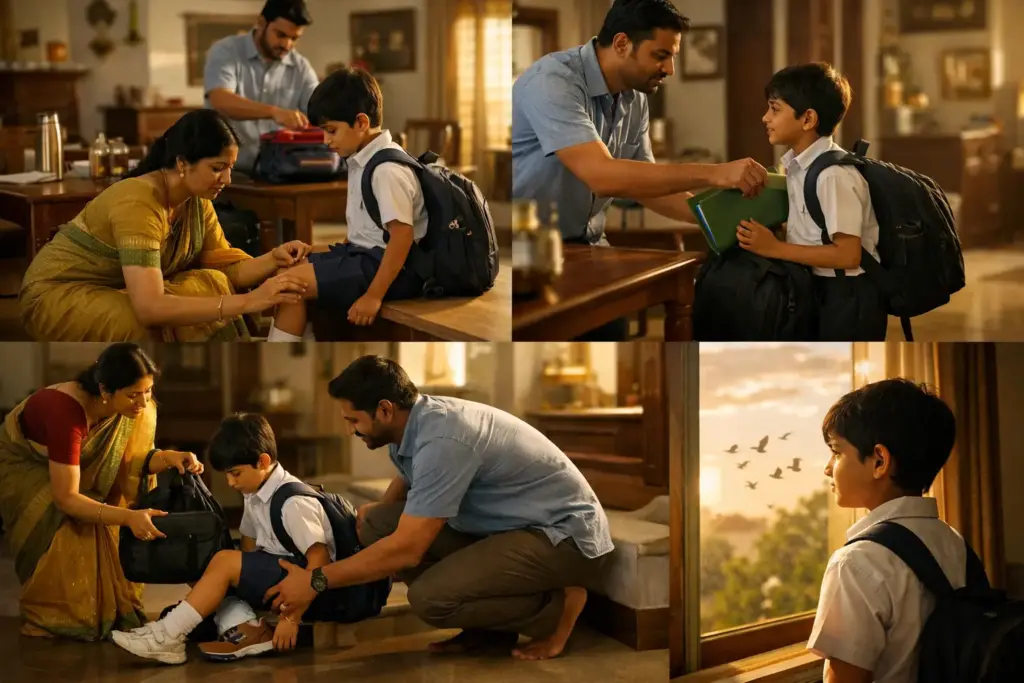
A child wakes up, goes to school, returns home, attends tuition, joins an activity class, finishes homework, eats dinner, watches a screen, and sleeps. Weekends are no different: coding camps, dance classes, sports coaching, worksheets, birthday events.
It all comes from good intentions. Parents want confidence, opportunity, & a competitive edge.
But within this carefully planned schedule, one thing often disappears:
Empty time!
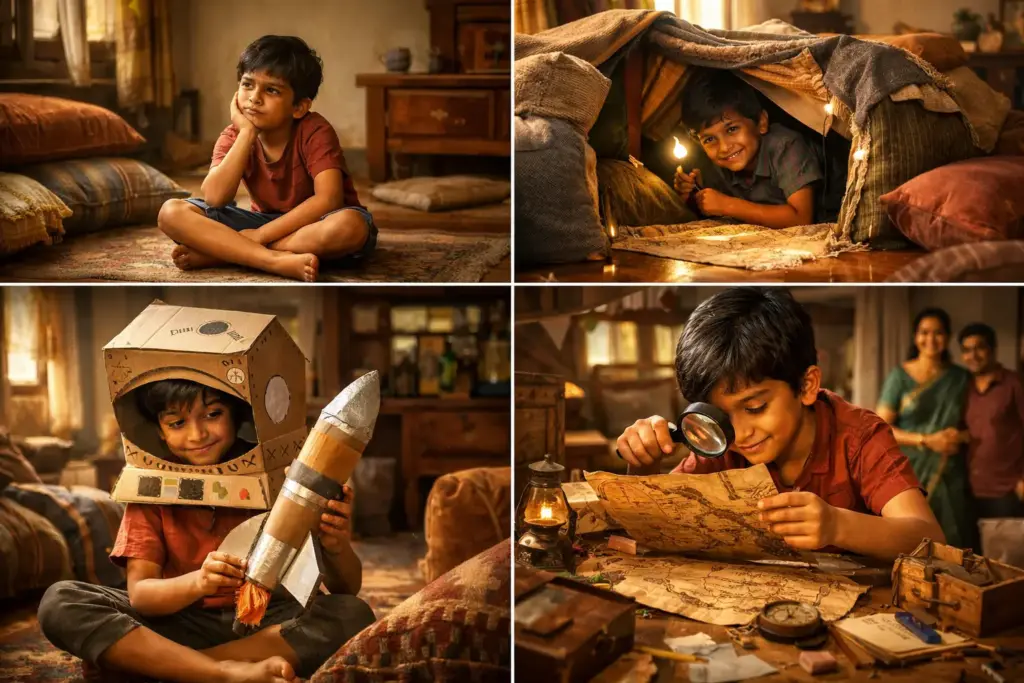
No wandering. No daydreaming. No inventing games with cushions. No staring at the ceiling. No figuring out what to do next.
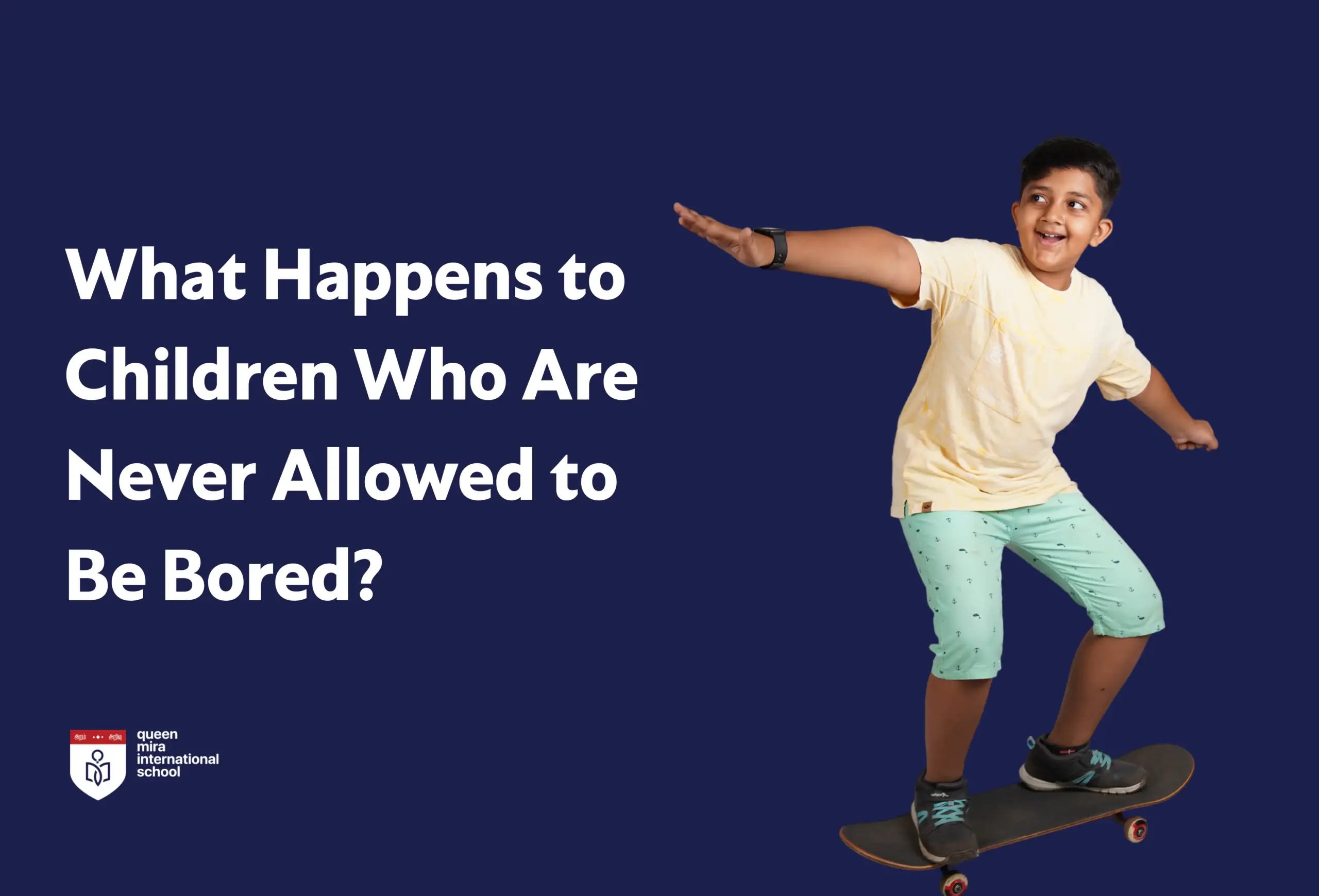
For families exploring holistic education in Madurai, a critical question follows: What are children losing when they are never allowed to be bored?
The Overscheduled Child: Why Doing More Is Not Always Better?
Today’s parents face real pressure. The world feels competitive, and it is natural to think that more structure will better prepare children.
Yet research shows children also need the opposite: time not directed by adults.
UNICEF has emphasised that play, rest, & downtime are essential for healthy development. The UN Convention on the Rights of the Child also recognises a child’s right to leisure and play.
When every moment is managed, children may become efficient, but not always independent. They may complete tasks well, but struggle to start ideas on their own and may stay busy, but not become deeply curious.
That is why many future ready schools in Madurai are rethinking nonstop instruction.
What Neuroscience Says About Empty Time?
Holistic Education Madurai | Boosting Curiosity | Boredom is Good
When children are not focused on a task, the brain does not switch off. Neuroscientists describe the Default Mode Network (DMN), active during rest, reflection, imagination, & internal thinking.
It supports:
- memory consolidation
- creative thinking
- emotional processing
- self-awareness
- future planning
In simple terms, when children seem to be doing nothing, be assured that their brains may be doing important background work.
This explains why most ideas appear during a walk, shower, or quiet moment. Child development thinkers recognised this long ago.
- Lev Vygotsky highlighted imagination & play as central to learning.
- Peter Gray has written extensively about how free play builds autonomy, negotiation skills, & problem-solving.
For parents seeking holistic education in Madurai, what matters is: Learning is not only what happens during instruction. It also happens through pause, play, reflection, & exploration.
The Boredom–Creativity Link. How to Nurture Creative Learning for Children?
Boredom often gets treated like a problem. But it is an important doorway.
When a child says, “I am bored,” they may be standing at the brink of self-direction. If an adult instantly fills the gap with an activity or instructions, the child begins to believe that ‘Someone else will solve my boredom’
If given the right space and push, a child will begin to:
- build a fort
- draw a comic
- ask questions
- make stories
- invent a game
- explore objects
- observe insects outside
This is where creative learning for children often begins, not in perfectly planned lessons, but in unscripted moments. Because occasional boredom is not harmful. It can be productive.
Did you know? Research published in the Academy of Management Discoveries suggests boredom can increase creativity by pushing the mind to seek novelty and meaning.
Quick Reflection: How Does Your Child Respond to Free Time?
When there is no device, class, or task, does your child:
- ask for stimulation immediately
- wander and explore
- invent games independently
- get frustrated quickly
Constant Stimulation vs Deep Development
Many children move from one stimulus to another: school bell → worksheet → tuition → short video → gaming reward loop → bedtime screen
And the brain adapts to repeated experiences. If children are constantly externally stimulated, they may struggle with other routine and slower activities:
- solving challenges without hints
- persisting through frustration
- reading quietly
- building patiently
- entertaining themselves
Most parents’ worries are around this question: “My child is smart, but gets bored quickly unless something exciting is happening.”
That is often an environmental pattern, not a character flaw.
Strong development needs both stimulation and stillness. This is why thoughtful, hands on learning schools balance engagement with experimentation, reflection, and open-ended tasks.
What Hands-On, Curiosity-Led Learning Actually Looks Like?
Parents often hear terms like experiential learning or hands on leanring schools for a comprehensive education.
In reality, it can look like this:
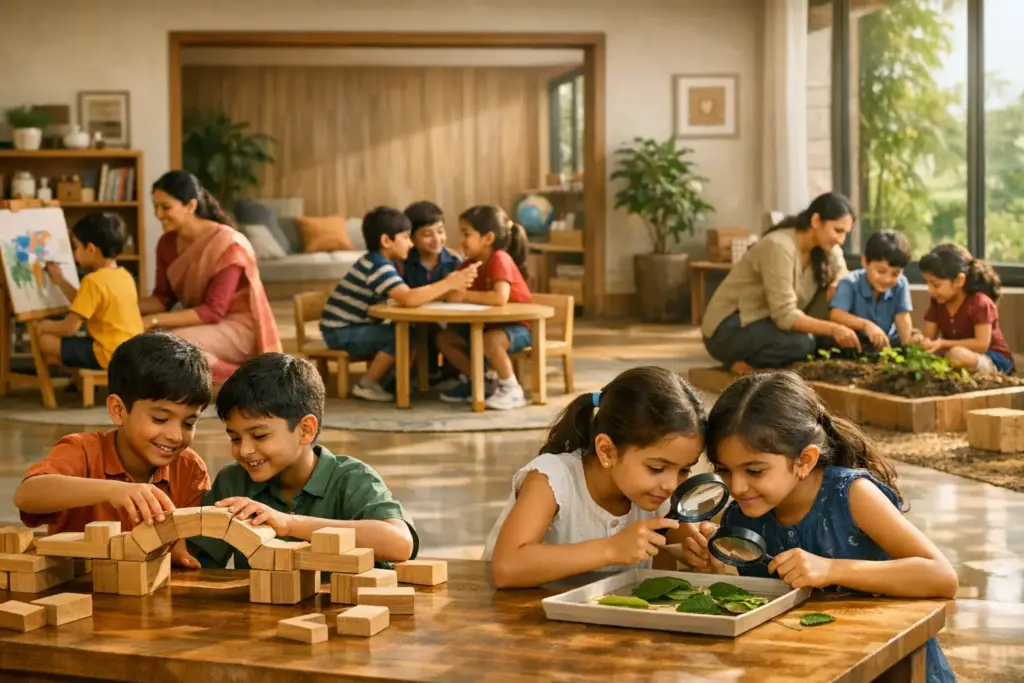
- Science: testing what sinks and floats
- Maths: measuring objects, solving real-life problems
- Social learning: teamwork, leadership, emotional reflection
- Language: debates, journaling, storytelling
- Nature: observing plants, insects, and weather
This approach builds more than marks.
It builds:
- confidence
- curiosity
- communication
- resilience
- adaptability
- initiative
These are the qualities that many parents seek in future ready schools in Madurai.
What Parents Can Do at Home to Imbibe Creative Learning for Children?
Small shifts at home can significantly nurture independent thinking.
1. Protect Free Time
Allow 30–60 minutes of unstructured time daily.
2. Do Not Rescue Boredom Immediately
Try saying: “I wonder what you will come up with.”
3. Keep Open-Ended Materials Nearby
Blocks, paper, clay, books, cardboard, and art tools.
4. Reduce Overscheduling
One less class can bring about more growth.
5. Let Them Solve Small Problems
Ask:
- What do you think?
- Is there another way?
- What could you try first?
A Note on Choosing the Right School Environment | Montessori School Madurai
So, if you are a parent searching for ‘a perfect Montessori school Madurai’, try asking better questions.
Not just: What are the marks? Or what is the syllabus?
Go further and ask:
- Does my child enjoy learning here?
- Is creativity valued?
- Are life skills developed too?
- Are questions encouraged?
- Is confidence built without fear?
These questions often lead families to explore the right Montessori school Madurai, inquiry-led campuses, & schools that value the child’s whole growth.
Because the best education does not only prepare children for exams, but for life.
Sometimes, that begins by giving them enough space to be bored.
FAQs
Why is boredom important for a child’s development?
It can build imagination, self-direction, resilience, & problem-solving.
Does boredom improve creativity in children?
Moderate boredom may encourage idea generation & curiosity.
How much free time should children have daily?
Many children benefit from 30 to 60 minutes of unstructured time.
What are the benefits of hands-on learning for children?
It improves confidence, retention, curiosity, and real-world thinking.
How do holistic schools approach learning differently?
They combine academics with creativity, emotional intelligence, communication, and life skills.