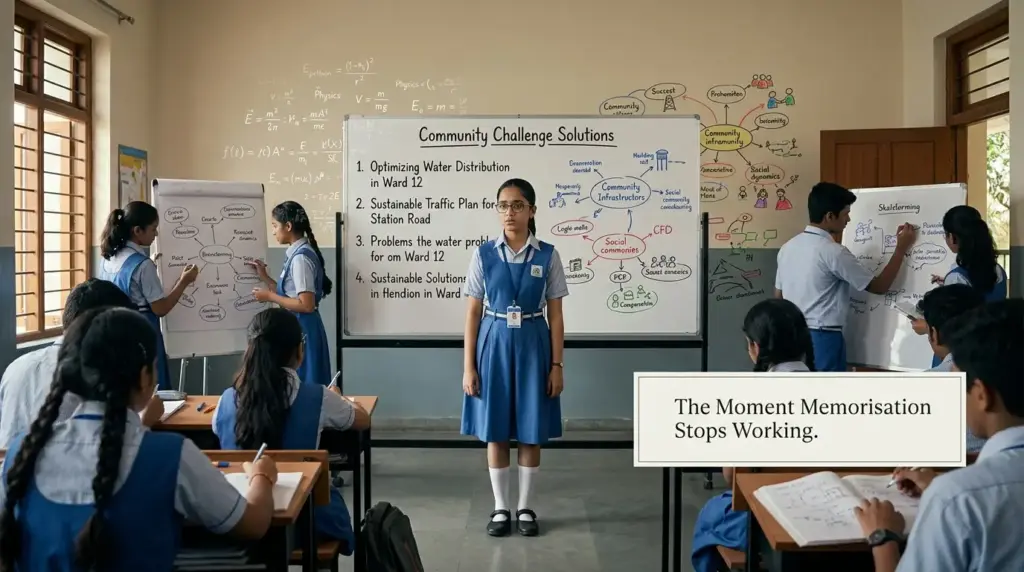
She ranked first in her class for four consecutive years. She could solve simultaneous equations in her head & recite historical timelines without pausing. By every measurable school standard, she was exceptional. Then one day her teacher asked the class to design a solution to a real problem in their neighbourhood. No textbook, no right answer, no instruction beyond “figure it out.”
She froze. And she was not the only one.
This moment plays out in classrooms across our country more often than parents realise & acknowledge, and it points to a gap that exam-oriented results simply cannot reveal. While academic performance predicts the next test, the skills that predict the future of a child’s life are an entirely different matter, which most schools miss to consider or measure.
Insights From Decades of Research About ‘What is Success’
The education research community has been building this case for decades, & the findings are consistent enough to be uncomfortable for anyone who equates school performance with bigger goals of life.
James Heckman, a Nobel-winning economist, found that non-cognitive skills like self-regulation, persistence, & the ability to work through ambiguity are stronger predictors of adult economic and social outcomes than academic achievement or IQ alone. His data showed that interventions focused on these skills in early childhood delivered a positive influence many times greater than those targeting academic content.
Angela Duckworth’s research on grit, which is the combination of passion and perseverance for long-term goals, consistently found that grit predicted achievement over and above measures of talent or intelligence.
Daniel Goleman’s work on emotional intelligence identified self-awareness, empathy, and emotional regulation as skills more predictive of professional success and relationship quality than cognitive ability alone.
Did You Know?
A 40-year longitudinal study by the University of Pennsylvania had tracked more than 1,000 children and found that self-control in childhood was a stronger predictor of wealth, adult health, and life satisfaction than intelligence, social class, or family background.
The research is not arguing against academic rigour, but that academic rigour, on its own, is not just enough.
The Key Skill That the Modern School Education Misses
There is one skill that sits strongly at the root of everything the research points to.
It does not appear with a star on a report card, does not get a column in most academic assessments, and will not be mentioned in most school prospectuses.
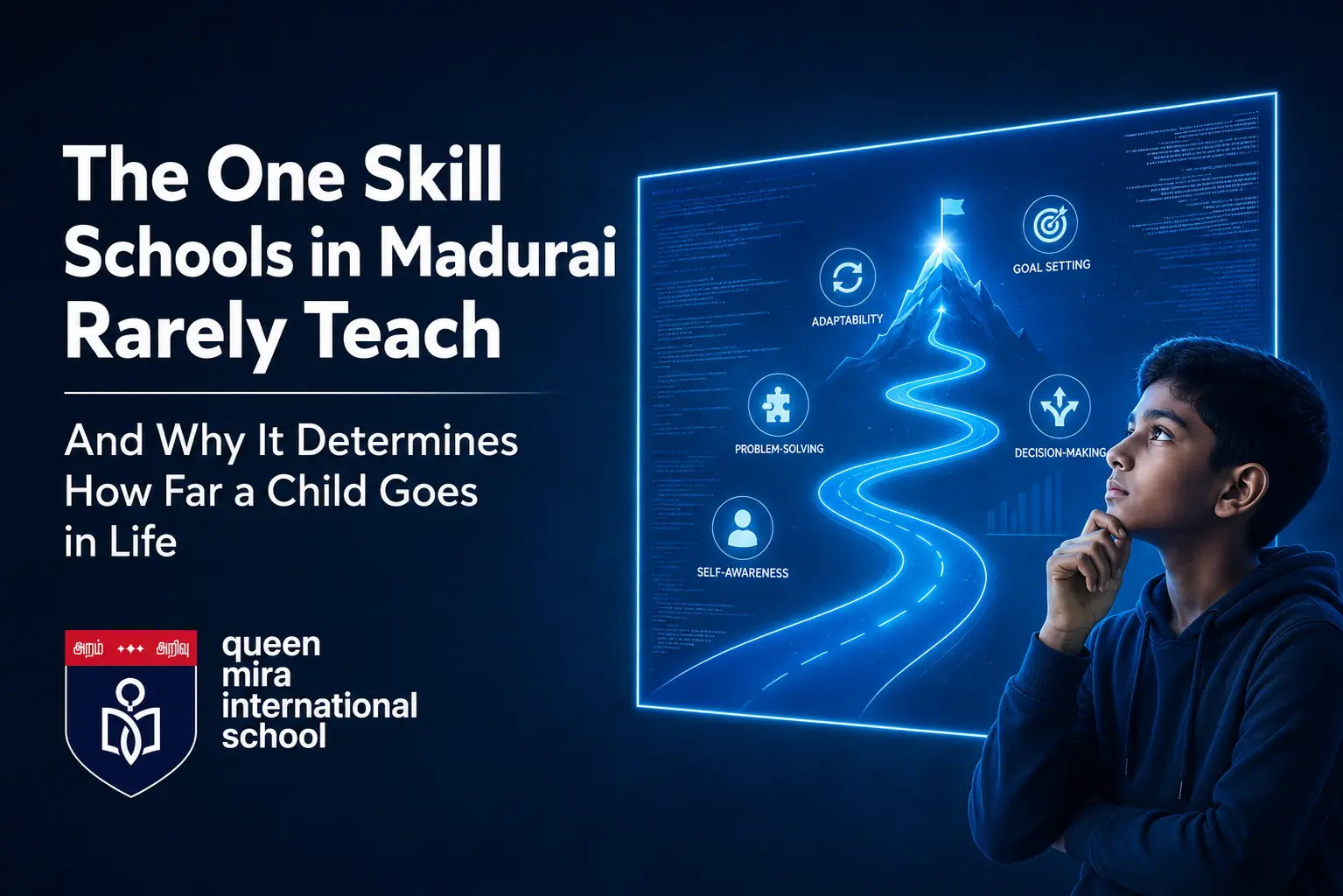
It is self-directed learning, which is the capacity to identify what you do not know yet, pursue that knowledge independently, attempt something genuinely challenging without waiting for explicit instructions, and self-correct when the attempt fails.
This is the origin of curiosity and the foundation of resilience.
Because this is how intellectual independence actually develops, not through being taught to think, but through being given the conditions in which thinking becomes natural & necessary. Most conventional schooling, despite best intentions, inadvertently suppresses it.
When every question’s solutions are overexplained, when the teacher is the sole source of knowledge, when marks reward replication over inquisitive thinking, then children learn, with great efficiency:
to be told
too habituated to be handheld and
to perform rather than to discover.
The result is a child who is highly capable within pre-defined parameters, and surprisingly turns limited the moment those parameters are removed.
RELATED: AI, Empathy & Education: The New 3Es of Modern Schooling
What Hands-On, Creative Learning for Children Actually Looks Like
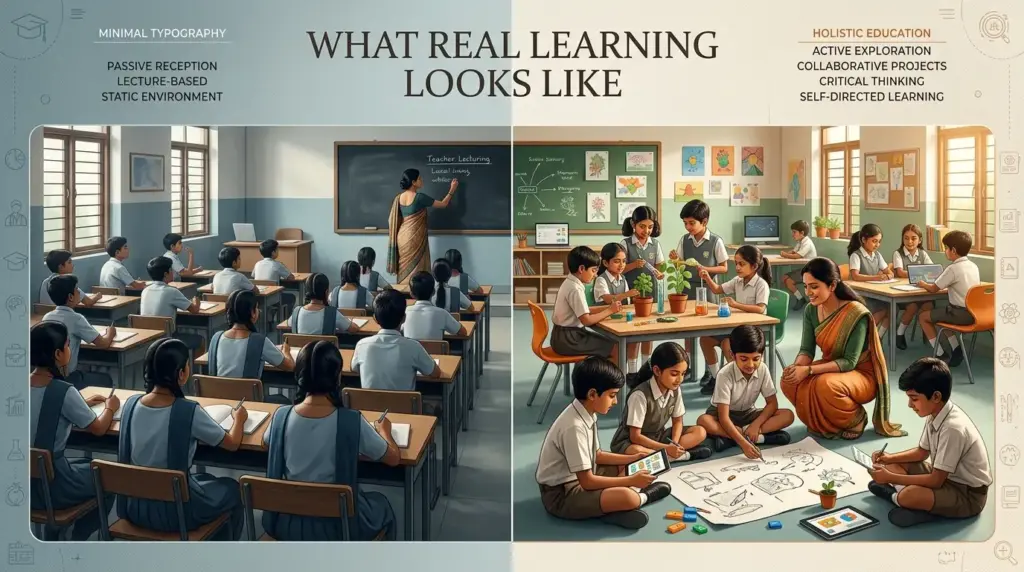
The difference between a classroom designed to deliver content and a thoughtful one designed to develop self-directed learners is visible within minutes of walking in.
In the first, children face forward. In the second, they face each other and the problem in front of them.
| Characteristic | Conventional Classroom | Holistic Education Madurai Classroom |
|---|---|---|
| Teacher’s role | Source of correct answers | Facilitator of questions |
| Problem design | Single correct answer, known in advance | Open-ended, multiple valid solutions |
| Student failure | An error to be corrected | A data point for self-correction |
| Assessment | Marks on a test | Portfolio, process, and reflection |
| Child’s internal posture | “What is the right answer?” | “What do I think, and how can I find out?” |
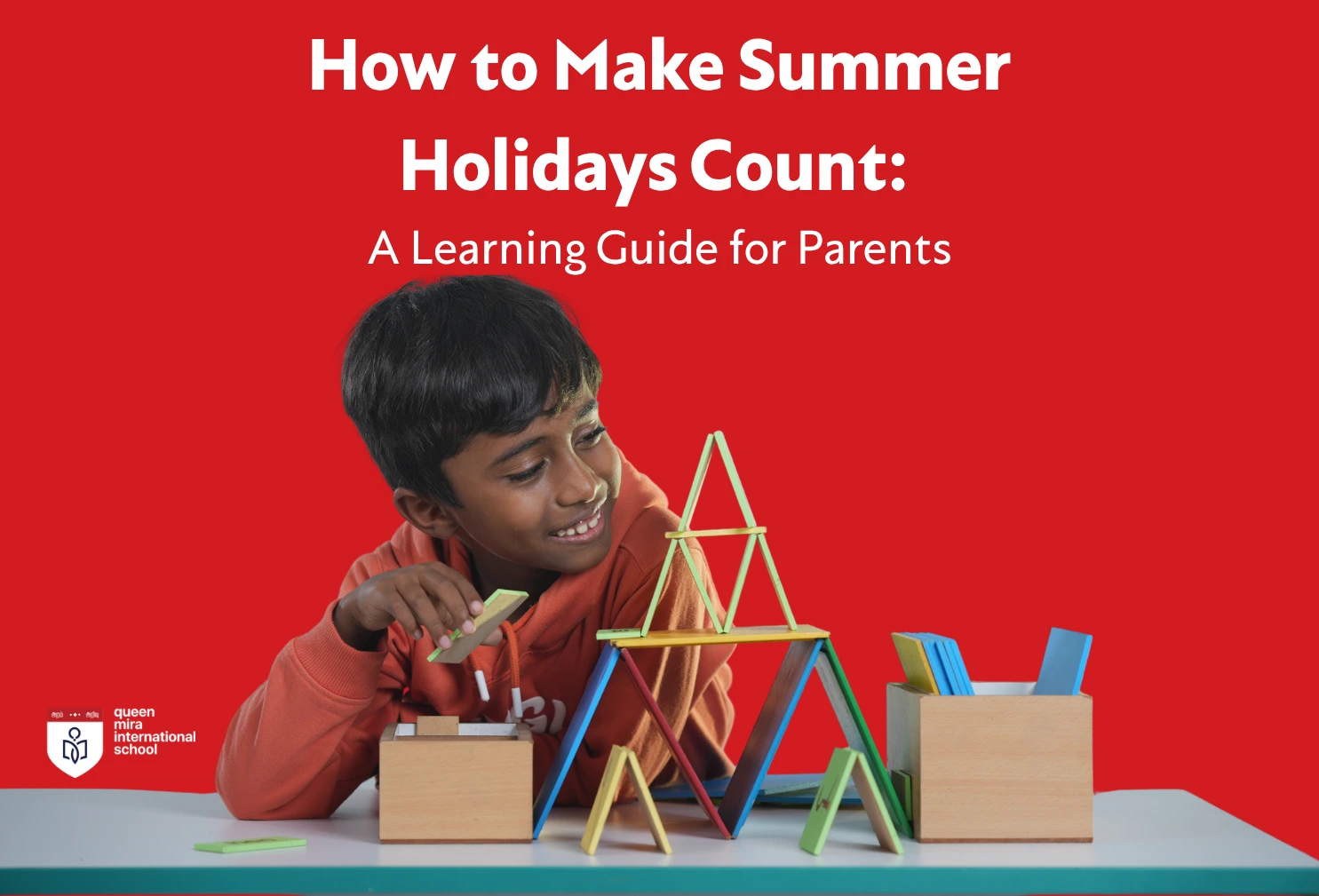
Creative learning for children in this environment is not just an art or craft class on Fridays. It is the operating principle of every lesson, where children will:
- Design investigations
- Test hypotheses that don’t always work.
- Experience & accept the specific discomfort of not knowing and
- Develop the specific competence of moving forward anyway.
This is what the expert and future-ready schools in Madurai, like Queen Mira, are striving to build.
Not children who can answer questions, but children who know how to ask them.
Parents’ Role Here, Regardless of the School
The good news is that self-directed learning isn’t limited to classrooms alone because parents are the first environment a child learns in, and the most persistent one.
Ask “What do you think?” before giving them answers.
The reflex to solve a child’s problem is understandable and worth resisting. But the moment you stop yourself and ask the child instead, you create the conditions for self-directed thinking.
Protect unstructured time.
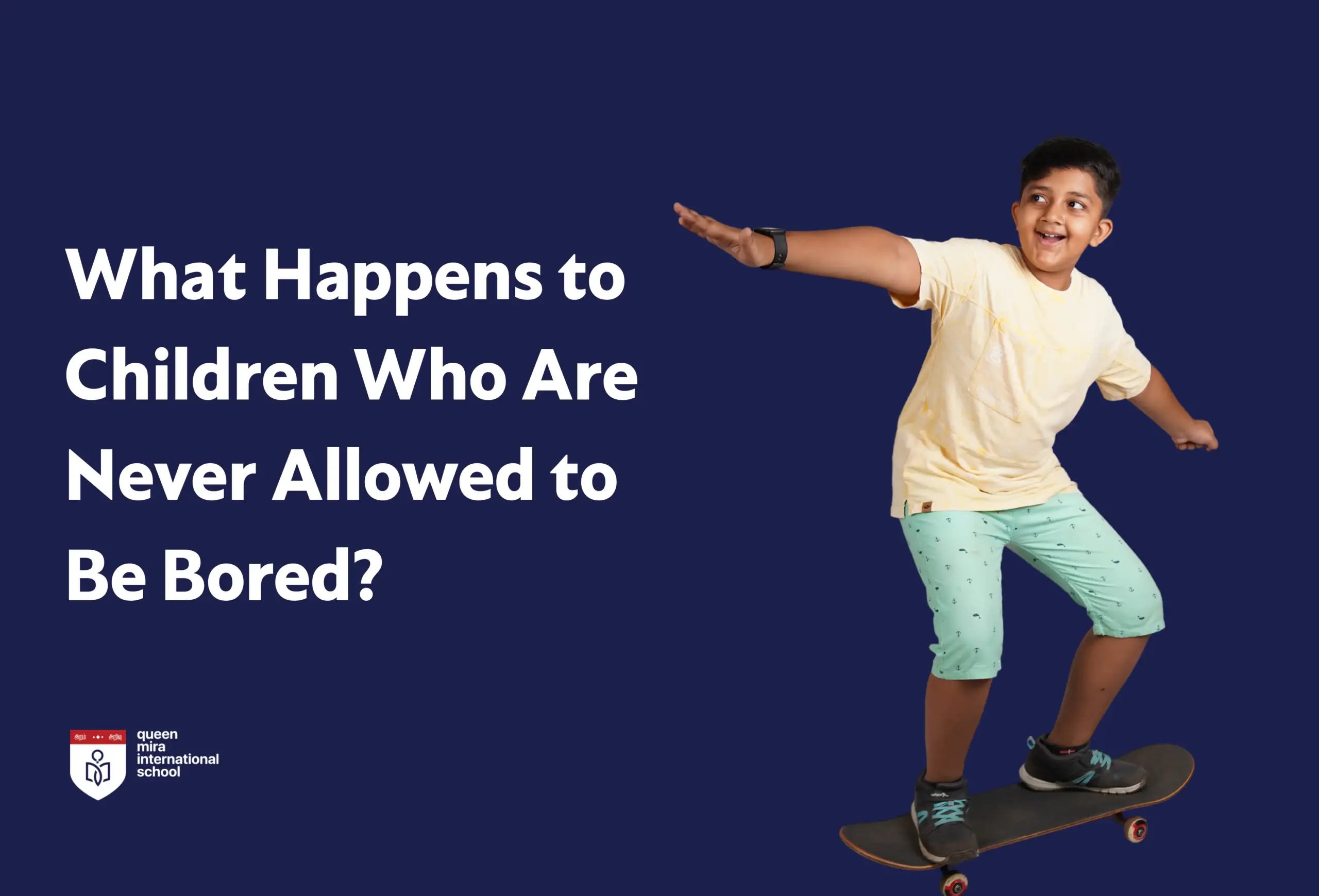
Over-scheduled children will not have space to get bored. Boredom is the birthplace of self-initiated curiosity, the kind that produces the most sustained engagement.
Let small failures land.
When a child builds/creates something that falls apart, or plans something that does not turn out as imagined, resist the urge to intervene before the frustration arrives. That frustration, held & worked through, is the actual learning.
So a pro-tip for all the smart parents is ask “what happened?” not “what went wrong?” The language matters. While one invites reflection, the other invites defence.
(give the below as a snippet block)
Did You Know?
A Stanford study found that children praised for effort (“you worked really hard”) showed significantly greater persistence on challenging tasks than those praised for intelligence (“you are so smart”) and were far more willing to attempt more challenging problems they might fail.
Why Do You Think These Matter Specifically for Madurai’s Next Generation
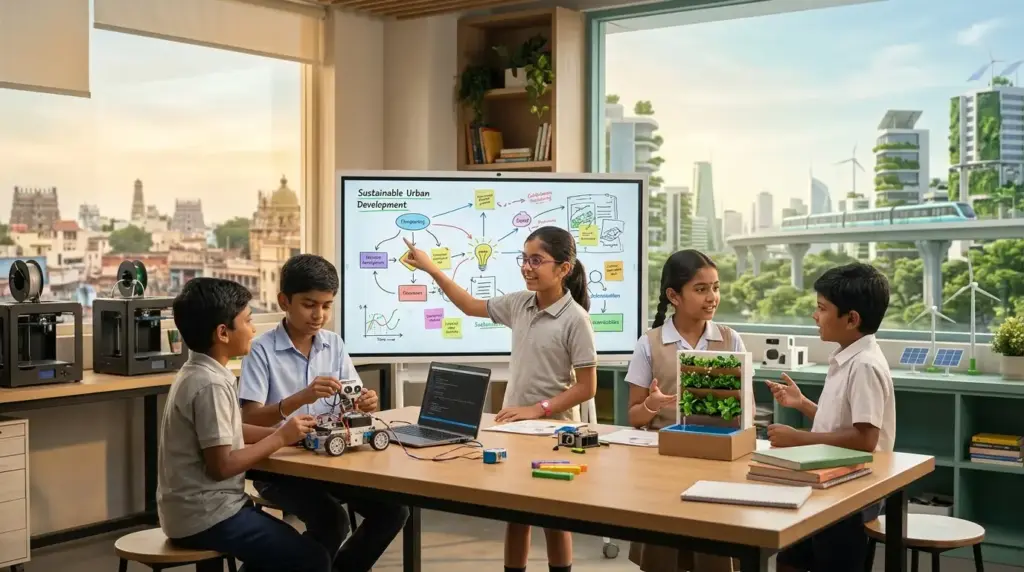
The children in Madurai’s classrooms today will enter a workforce shaped by evolving technologies, problems, and industries that do not yet exist.
The World Economic Forum’s Future of Jobs Report consistently places adaptability, creative problem-solving, and collaborative intelligence among the top skills employers will ask for and consistently notes these are the hardest to find.
Holistic education in Madurai, built around the development of emotionally aware, self-directed, and intellectually independent learners, is not a philosophical preference, but a practical response to what the next two decades will actually need.
The question every Madurai parent is really asking, whether they know it or not, is not “which school has the best marks?” but “which school is building the whole person my child needs to become?”
Come and See Real Learning Happen at Queen Mira. This isn’t a tour or a presentation. But a chance to witness children think, ask, attempt, and reflect!
→ Visit QMIS and observe a class in session
Our Education Philosophy | Curriculum | About QMIS | Plan a School Visit