Here is a question most parents quietly struggle with every holiday: “If my child isn’t studying now, will they fall behind?”
It’s a fair worry, especially for working parents and academically conscious families. Holidays often come with mixed emotions: relief that routines pause, & fear that learning might stop.
But what if we told you this?
Some of the most powerful learning doesn’t happen during school terms, but during breaks.
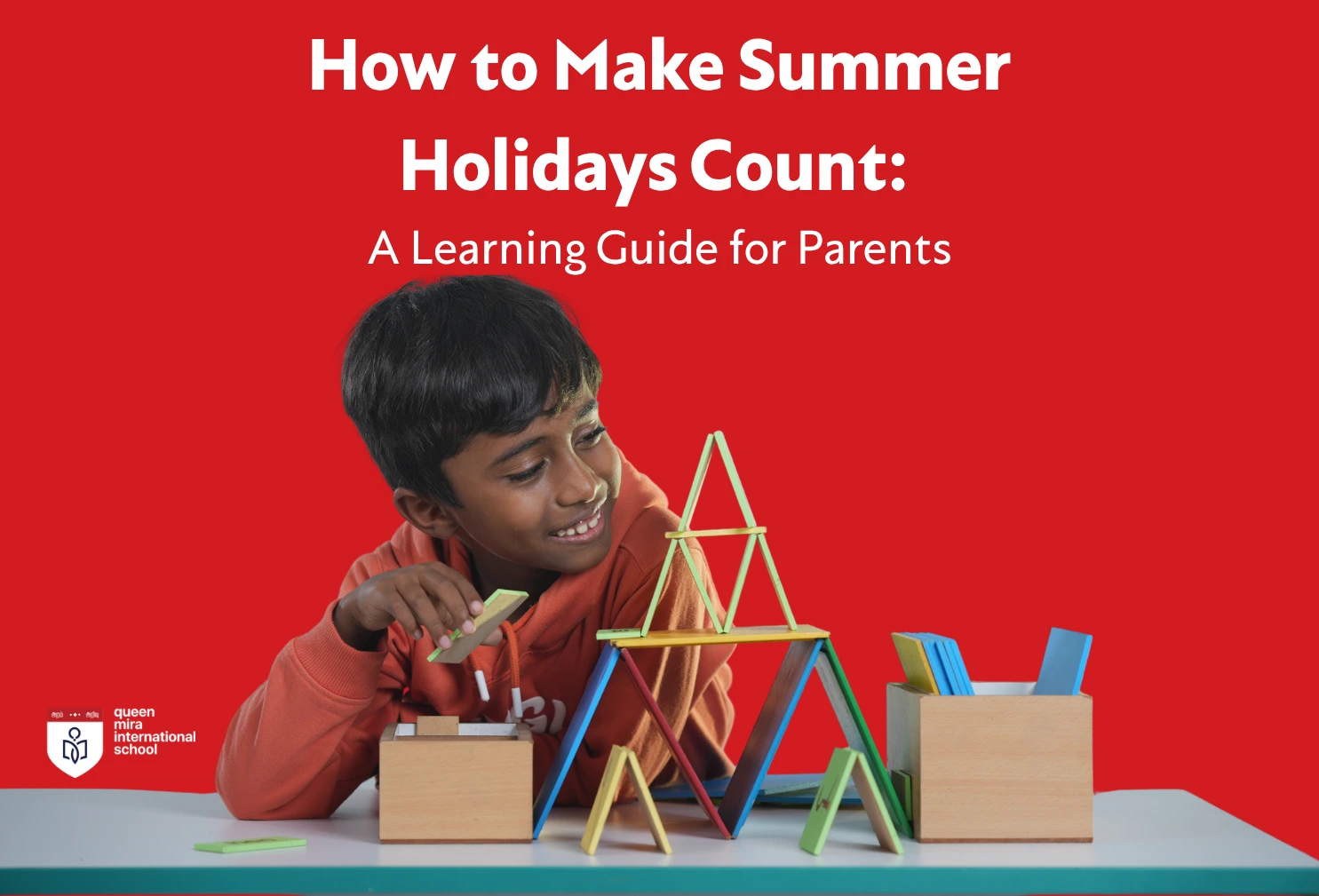
Not in the form of textbooks or worksheets, but through curiosity, play, conversation, exploration, & reflection. This is the core idea behind holiday learning,which is deeply rooted in the psychology of learning and child brain development. Let us get more clarity from this blog on the why, how, and what of holiday learning.
Rethinking Holidays and Learning
Learning does not stop during holidays; it simply changes its shape.
Instead of structured lessons, children learn through:
- Experiences
- Questions
- Observation
- Imagination
When parents reframe holidays as a different learning phase, the pressure eases for both adults and children. And interestingly, research increasingly shows that learning during holidays, when done right, will be more effective than forced academic routines.
How the Child’s Brain Learns Best?
Children do not learn best under constant pressure. They learn best when the brain feels safe, curious, & engaged.
From a child brain development perspective:
- Relaxed attention will increase memory formation
- Curiosity releases dopamine, which is the motivation chemical
- Reduced stress improves retention & understanding
This is why joyful learning environments, where children feel emotionally secure, lead to deeper comprehension.
Did you know? Recent neuroscience research shows that stress hormones like cortisol interfere with memory consolidation, especially in young children. A calmer state actually improves learning outcomes.
What Happens When Learning Is Forced?
When learning becomes only about:
- Completing worksheets
- Memorising without meaning
- Studying to avoid punishment or fear
Children may comply, but they don’t always retain.
Forced learning often leads to:
- Burnout without clarity
- Resistance to reading or thinking
- Short-term memory without long-term understanding
This is why excessive pressure during holidays can be counterproductive. Children may “study,” but learning does nottruly settle.
Why Holidays Create the Ideal Learning Environment?
Holidays remove many of the barriers that restrict natural learning during school terms.
Here is what changes:
| During School Term | During Holidays |
|---|---|
| Time pressure | Open-ended time |
| Exam focus | Exploration focus |
| External motivation | Internal curiosity |
| Fear of mistakes | Freedom to experiment |
This shift gives children:
- Autonomy (children choosing what interests them)
- Play-based discovery
- Emotional safety
- Meaningful conversations
All of these are foundations of experiential learning and balanced education.
RELATED: How Movement Boosts Learning: The Science Behind Active Classrooms
What is the Science Behind Holiday Learning?
Educational psychology highlights several learning principles that align perfectly with holidays:
- Experiential learning: Children learn by doing and not just by listening
- Informal learning: Real-life contexts make concepts stick
- Spaced learning: Breaks between learning improve long-term retention
- Play-based cognition: Play strengthens problem-solving and creativity
None of these requires long study hours and works best without rigid schedules.
Did you know? Global education systems are increasingly valuing informal and experiential learning, especially for primary and middle school students, as preparation for future skills — not just exams.
What “Holiday Learning” Really Means!
When it comes to holiday learning, many parents have to understand that:
❌ It does not mean:
- Daily worksheets
- Repeating school routines
- Long study hours
✅ It does mean:
- Reading stories of choice
- Visiting new places and asking questions
- Helping with real-life tasks
- Building, drawing, experimenting
- Talking about observations and feelings
In short, it is the most effective learning that feels natural, joyful, and meaningful.
Skills Children Build During Holiday Learning
Holidays give children the mental space to build skills that classrooms sometimes struggle to prioritise.
These include:
- Creativity and imagination
- Communication and expression
- Problem-solving and reasoning
- Independence and confidence
- Emotional intelligence
These are not “extra” skills. They are core life skills and a vital part of balanced education.
How Do Schools Support Healthy Holiday Learning?
Parents do not have to figure this out alone. Because expert & progressive schools play a key role by:
- Encouraging reflection, reading, and exploration
- Guiding parents with age-appropriate ideas
- Avoiding heavy holiday homework
- Respecting children’s need for rest and play
When schools understand the psychology of learning, they help families replace guilt with confidence.
How QMIS Aligns With the Psychology of Learning?
At QMIS, learning is not treated as a race but as a reflective journey.
The school’s approach reflects key principles of child brain development:
- Strong academic foundations without fear-based pressure
- Emphasis on experiential learning and understanding
- Focus on emotional safety and well-being
- Encouragement of joyful learning, during school and beyond
This balance helps children grow not just as students, but as confident & curious individuals.
FAQs
Is holiday learning good for children?
Yes, when it is pressure-free and experience-based, holiday learning supports curiosity, retention, and emotional well-being.
Will children forget academics during holidays?
Short breaks do not cause learning loss. In fact, relaxed learning often helps children return to school with better clarity & motivation.
How much learning is ideal during school breaks?
There is no fixed number of hours. Light, interest-driven learning integrated into daily life works best.
What kind of learning helps children the most?
Learning that combines play, experience, reflection, and conversation is most effective, especially during holidays.
Children do not need holidays from learning. They need holidays for learning in a healthier way.
At QMIS, we believe that learning should feel natural, joyful, & meaningful, both in school and beyond. Visit QMIS to explore an education that respects how children truly learn.