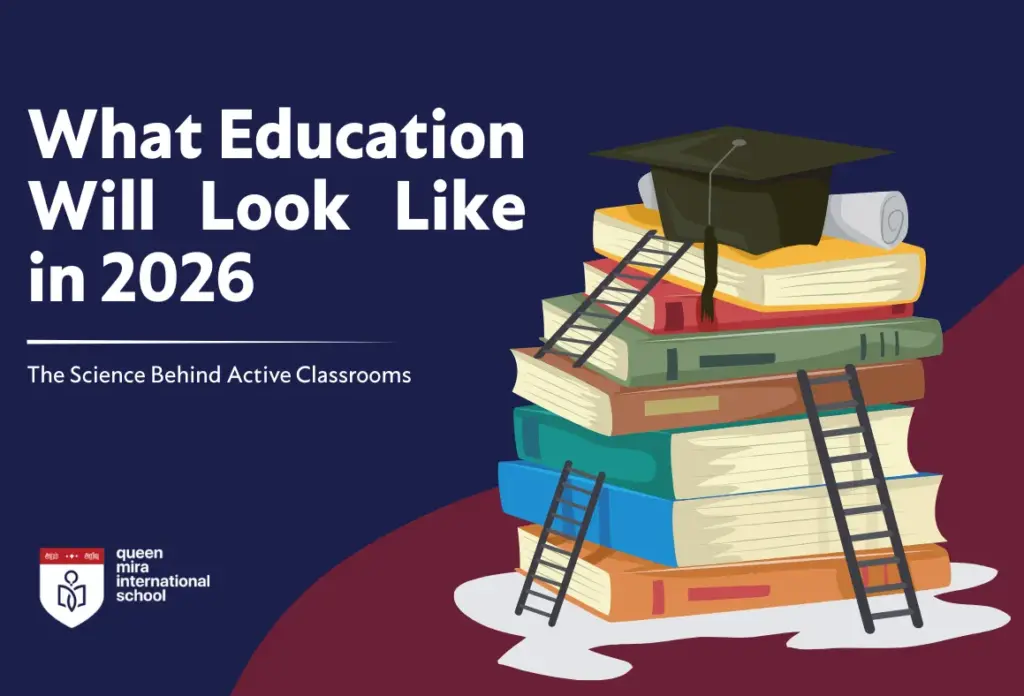
Education in India is evolving at a rapid pace, and with 2026 right around the corner, technology will be driving major transformations in how we learn.
Students are getting smarter by the day, and it is only ideal for parents to be prepared for what is to come. This blog will take you through all that you need to know about the future of education in 2026 and how Queen Mira International School (QMIS), which is one of the best CBSE International schools in Madurai, is already ahead of the curve.
Did you know? By 2026, 70% of classroom learning will involve AI-powered tools.
But don’t worry, teachers won’t be replaced. Instead, AI will support teachers, giving them more time to focus on individual students.
1. Smarter, More Interactive Classrooms
In 2026, classrooms will turn more interactive, AI-assisted, and immersive. From personalised tools to AR/VR learning environments, the classroom will feel like a learning playground.
Key Features:
| Feature | What it Means for Students |
|---|---|
| AI-Assisted Learning | Personalized lessons that adapt to each student’s pace and learning style. |
| AR/VR Classrooms | Immersive learning experiences where students can explore history, science, and geography virtually. |
| Interactive Learning Tools | Tools that engage students in real-time feedback and dynamic content, making learning fun and exciting. |
Take this quick quiz to reflect & understand this better.
How do you want your child to learn in 2026?
A) Strong academic foundation with structured teaching
B) A balance of academics + creativity + tech-based learning
C) Hands-on, real-world projects and problem-solving
What worries you most about your child’s future schooling?
A) Whether they score well and stay academically strong
B) Whether the school prepares them for future skills like AI, creativity & communication
C) Whether they become confident, independent thinkers who can handle real-life challenges
What do you think should be the teacher’s role in a 2026 classroom?
A) Teach the syllabus completely and maintain discipline
B) Blend technology with personal attention and emotional support
C) Guide students through projects, teamwork, and real-world learning
What matters most when choosing a school for the future?
A) Strong academics and consistent performance
B) A school that balances academics, technology, and values
C) A school that encourages innovation, collaboration, and global skills
How do you want your child to be prepared for life after school?
A) Well-prepared for exams and competitive tests
B) Ready with both academic strength & future-ready skills
C) Equipped with life skills, creativity, leadership, and adaptability
If you chose more A’s, you prefer strong academics; more B’s means you want a balanced, future-ready approach; & more C’s shows you value real-world skills and independence.
Queen Mira brings all three together to prepare children confidently for the future.
2. Which Are the Skills That Will Matter Most in 2026?
In 2026, critical thinking, problem-solving, & creativity will be in high demand. Along with emotional intelligence and digital literacy, these skills will become vital for success.
Top Skills for 2026:
| Skill | Why It’s Important |
|---|---|
| Problem-Solving | Ability to tackle complex, real-world challenges. |
| Creativity | Innovation and out-of-the-box thinking to shape the future. |
| Communication | Expressing ideas clearly and collaborating with others. |
| Global Awareness | Understanding global issues and cultures for a connected, future-ready world. |
| Emotional Intelligence | Managing emotions, building relationships, and being self-aware in a rapidly changing world. |
Did you know? In 2026, creative problem-solving will be considered more important than traditional memorisation for future jobs.
3. If Technology Takes Over, Will Human Values Be in Danger?
Technology is taking over, but it will never replace human values. In 2026, AI and technology will enhance learning while fostering empathy, creativity, and collaboration.
| What Technology Will Do | How It Enhances Human Values |
|---|---|
| AI-Driven Tools | Free up teachers to connect more deeply with students. |
| Digital Learning Platforms | Provide personalized learning experiences, boosting creativity. |
| Virtual Reality | Allows for real-world simulations that encourage empathy and teamwork. |
| Robotic Assistance | Teaches students about collaboration with tech in a safe and ethical way. |
RELATED: How Movement Boosts Learning: The Science Behind Active Classrooms
4. Real-World, Project-Based Learning
By 2026, education will be more about doing than memorising.
Project-Based Learning (PBL) will rule the classroom.
Students will tackle real-world problems, work on global projects, and develop critical skills through hands-on experiences.
How will this look in 2026?
| Project | Key Skills Developed |
|---|---|
| Global Collaborations | Teamwork, communication, and global awareness. |
| Real-World Problem-Solving | Critical thinking, creativity, and practical application of learning. |
| Interdisciplinary Projects | Connecting multiple subjects and skills for holistic development. |
| Sustainability Projects | Environmental awareness, research, and actionable solutions. |
5. Wellness, Safety & Emotional Growth
Mental health, social-emotional learning, & digital safety will be as important as academic skills in 2026. Schools will prioritise wellness & ensure students are emotionally prepared for the digital world.
How is QMIS Preparing Students?
| Focus Area | How We’re Preparing for 2026 |
|---|---|
| Mental Health Support | On-site counselors, stress management programs, and mindfulness sessions. |
| Emotional Intelligence | Weekly workshops and activities promoting empathy, communication, and self-awareness. |
| Safe Digital Practices | Digital literacy classes that teach responsible online behavior. |
| Physical Wellness | Yoga, sports, and activities promoting healthy physical development and mindfulness. |
Did you know? By 2026, 40% of students will work on global projects that solve real-world issues such as climate change, poverty, and digital equity.
Why Parents Choose QMIS?
Parents are choosing Queen Mira International School (QMIS) because we’re already shaping future-ready students. From personalised AI-assisted learning to fostering creativity & emotional growth, QMIS is preparing students for 2026 and beyond.
How QMIS Stands Out?
- Innovative, tech-enhanced learning that adapts to each student’s needs.
- A focus on life skills, creativity, and global awareness.
- Balanced emotional and academic development for well-rounded students.
- Real-world learning experiences that encourage critical thinking, collaboration, and problem-solving.
Prepare Your Child for a Future-Ready World
At QMIS, we are committed to ensuring your child is future-ready, equipped with the skills, knowledge, & emotional resilience to thrive in 2026 and beyond. Explore next-generation learning today at Queen Mira International School, Madurai.
FAQs
What changes can children expect in schools by 2026?
Increased use of AI, interactive classrooms, and a bigger focus on emotional intelligence.
How does QMIS prepare students for an AI-driven future?
We provide a balance of digital learning, emotional growth, and real-world experiences.
Will AI replace teachers in 2026?
No, AI will support teachers, enhancing personalised learning, but human interaction will always be crucial.
How will QMIS balance digital learning with emotional development?
At QMIS, we ensure a holistic education that integrates academic, emotional, and social development.
Is your child ready for a future-ready world?Visit the school website and explore next-generation learning at Queen Mira International School, Madurai.